
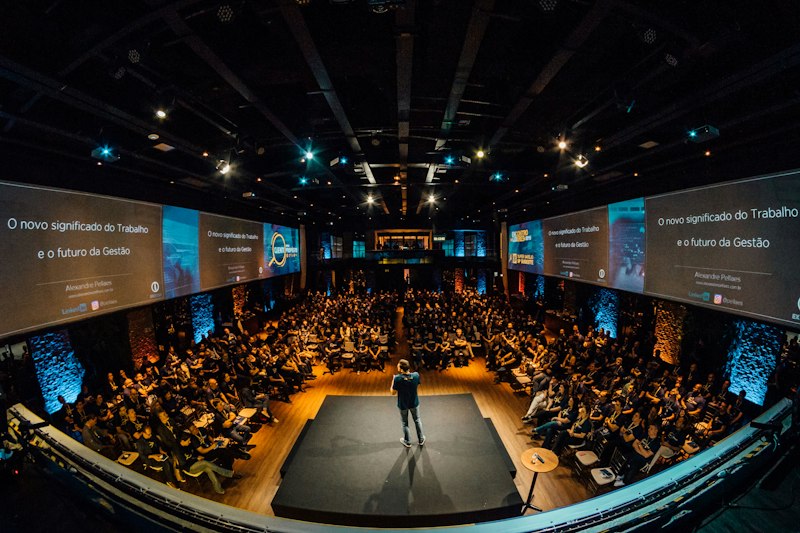
The Billion-Dollar Convention Center Boom: How Venue Mega-Expansions Are Reshaping MICE in 2026
Over $2 billion in convention center expansions are underway across the U.S. alone in 2026, from Kentucky's $460M transformation to Indiana's 143,500 sq ft expansion. With 12 new venues opening in NYC and the global MICE market projected to hit $2.1 trillion by 2035, the physical infrastructure powering business events is being reimagined at unprecedented scale.
Something remarkable is happening in the world of convention centers and event venues in 2026: a building boom of historic proportions. Across the United States and around the globe, cities are investing billions of dollars to expand, renovate, and reimagine the physical spaces where business events happen.
This isn’t just about bigger rooms. It’s a strategic bet by cities and states that the $1.14 trillion global MICE industry—projected to reach $2.1 trillion by 2035 at a 7.02% CAGR, according to Precedence Research—will continue to grow, and that the venues able to host the next generation of events will capture an outsized share of that growth.
The Scale of Investment
The numbers are staggering. In the U.S. alone, multiple convention center projects totaling well over $2 billion are either under construction or recently completed:
Kentucky Exposition Center: $460 Million Transformation
The largest single project is Louisville’s Kentucky Exposition Center, which is undergoing a $460 million transformation that will expand it from 1.1 million to 1.38 million square feet, according to Northstar Meetings Group. Phase I is a $180 million, 350,000 sq ft multipurpose building expected to be completed by end of 2026.
When finished, the facility will be one of the largest exhibition complexes in North America, positioning Louisville as a serious contender for major national and international trade shows that previously had only a handful of venue options.
Indiana Convention Center: 143,500 Sq Ft Expansion
Indianapolis is adding 143,500 square feet to the Indiana Convention Center, including a 50,000 sq ft ballroom—one of the largest column-free ballrooms in the Midwest. The expansion is connected to a new 800-room Signia by Hilton hotel, with both projects anticipated to open in fall 2026, as reported by Skift Meetings.
Indianapolis already ranked among the top convention cities in the U.S., and this expansion cements its position. The integrated hotel-convention center model is particularly significant—it eliminates the “last mile” problem that plagues many convention destinations where delegates must shuttle between hotels and event venues.
Fort Lauderdale: 801-Room Omni Headquarters Hotel
Broward County is opening a new 801-room Omni headquarters hotel in Fort Lauderdale in 2026, directly connected to the Greater Fort Lauderdale/Broward County Convention Center. This follows the trend of cities pairing convention facility upgrades with purpose-built headquarters hotels to create complete event campuses.
Lancaster County: New-Generation Event Space
Even mid-sized markets are investing. The Lancaster County Convention Center in Pennsylvania recently unveiled its new “Commons on Vine” event space, featuring a 44-foot main video display and capacity for 400 guests, according to National Today. The design emphasis on built-in technology infrastructure signals where the industry is heading—venues that come “tech-ready” rather than requiring planners to bring everything in.
New York City: 12 New Venues
New York City has seen 12 new venues open for spring 2026 meetings and events, as documented by BizBash. These range from reimagined historic spaces to purpose-built event facilities, reflecting NYC’s strategy of offering variety and uniqueness alongside its massive convention infrastructure at the Javits Center.
Why Now? The Forces Driving the Boom
Several converging factors explain why so many cities are investing so heavily in venue infrastructure simultaneously:
1. Post-Pandemic Demand Surge
The MICE industry has not just recovered from the pandemic—it has surpassed pre-2020 levels. Hybrid events have grown 63%, virtual conferencing adoption is up 58%, and smart technology integration in venues has increased 61%, according to Eventtia. But crucially, in-person attendance is also surging. Organizations that spent years in virtual mode are now investing heavily in face-to-face gatherings, and they want venues that match their elevated expectations.
2. The Flight to Quality
Event planners and their corporate clients are increasingly choosing fewer, larger, higher-quality events over numerous smaller ones. This “flight to quality” means venues must offer premium experiences—advanced AV systems, flexible configurations, integrated technology, and on-site hospitality—to compete for the events that matter most.
3. Economic Impact Competition Between Cities
Convention centers are economic engines. A major trade show can bring tens of thousands of delegates who spend on hotels, restaurants, transportation, and entertainment. Cities that lose events to competitors with better facilities lose that economic activity permanently. The current wave of expansion reflects intense competition among U.S. cities to capture a larger share of the $146 billion U.S. MICE market, which is projected to reach $205 billion by 2032 at a 5.0% CAGR, according to Coherent Market Insights.
4. Technology Requirements Have Changed
Modern MICE events require infrastructure that didn’t exist a decade ago. High-bandwidth Wi-Fi for thousands of simultaneous devices, built-in streaming capabilities for hybrid formats, LED display walls, smart badges and indoor wayfinding systems—all of these require purpose-built or heavily renovated spaces. Many existing convention centers were designed in an era of projectors and podiums, and retrofitting only goes so far.
Global Parallels
The venue expansion trend isn’t limited to the United States. Globally, cities are making similar investments:
- Asia-Pacific, which already contributes more than 44% of global MICE revenue, is seeing major venue investments in Singapore, Bangkok, and Sydney
- Europe is estimated to expand at the fastest CAGR through 2035, with cities like Barcelona, Berlin, and Vienna upgrading existing facilities and adding capacity
- The Middle East continues its aggressive venue-building strategy, with Saudi Arabia and the UAE opening new world-class facilities as part of broader economic diversification plans
- Southeast Asia is emerging as a venue investment hotspot, with Thailand’s MICE X-Change (TMX) 2026 expecting 4,000+ participants under the theme “Innovation and Sustainability”
What the New Venues Look Like
The convention centers being built and renovated in 2026 share several design principles that distinguish them from their predecessors:
Flexibility First
Gone are the rigid configurations of traditional convention halls. New venues prioritize modular, reconfigurable spaces that can transform from a 10,000-person general session to multiple 500-person breakout rooms to an exhibition floor—sometimes within hours. Movable walls, retractable seating, and standardized utility connections make this possible.
Technology as Infrastructure
Rather than treating AV and networking as add-ons, new venues build technology into the architecture:
- Fiber-optic backbones capable of supporting 100,000+ simultaneous device connections
- Built-in LED display systems that eliminate the need for rented screens
- Indoor positioning systems for wayfinding and analytics
- Integrated streaming studios for hybrid event production
- Smart building systems that monitor and optimize energy, HVAC, and lighting in real time
Sustainability by Design
Nearly 88% of corporate travelers prefer eco-conscious event partners, according to EVINTRA. New venues are responding with:
- LEED certification or equivalent green building standards
- Solar panels and renewable energy integration
- Rainwater harvesting and water recycling systems
- Waste reduction infrastructure (composting, recycling stations, elimination of single-use plastics)
- Electric vehicle charging stations and proximity to public transit
Integrated Hospitality
The most successful new developments pair convention space directly with hotel rooms, restaurants, and entertainment venues. The Indiana Convention Center + Signia by Hilton model and the Fort Lauderdale Convention Center + Omni Hotel approach represent this trend—creating self-contained event campuses where delegates never need to leave the complex.
What This Means for Event Planners
More Options, Better Negotiating Power
The expansion of venue supply is good news for event planners. More high-quality venues competing for events means better availability, more competitive pricing, and greater willingness from venues to customize packages. Cities that have invested hundreds of millions in new facilities are highly motivated to fill them.
Plan for the Transition Period
Many major expansions are completing in late 2026 and 2027. Planners who book early can secure favorable terms at newly opened facilities that are eager to build their event calendars. The first events at a new venue often get premium attention and support from venue staff.
Evaluate the Full Package
When considering an expanded or new venue, look beyond the square footage:
- Technology infrastructure: What’s built in vs. what you’ll need to rent?
- Hotel connectivity: Is the headquarters hotel attached, connected, or a shuttle ride away?
- Sustainability credentials: Can the venue help you meet your organization’s ESG reporting requirements?
- Flexibility: Can spaces be reconfigured to match your event format, or are you locked into a fixed layout?
- City support: Does the local CVB offer incentives for events at the new facility?
Leverage Technology-Ready Venues
Venues with built-in technology infrastructure can significantly reduce your production costs and logistical complexity. A built-in LED wall, fiber-optic network, and streaming studio can save tens of thousands of dollars compared to bringing in rental equipment—and deliver a better experience.
The Bigger Picture
The current wave of convention center investment represents a fundamental vote of confidence in the future of in-person business events. At a time when some predicted that virtual meetings would permanently replace conferences and trade shows, cities are betting billions that the opposite is true.
The data supports their bet. The global MICE market is growing at over 7% annually, hybrid formats are complementing rather than replacing in-person attendance, and corporate event budgets are rising. The venues being built today will shape where and how the MICE industry gathers for the next 20-30 years.
For event planners, the message is clear: the physical infrastructure of the MICE industry is being upgraded at a scale not seen in decades. The venues of 2026 and beyond will offer capabilities that were impossible just a few years ago—and the cities building them are ready to compete aggressively for your business.
Key Takeaways
- Over $2 billion in U.S. convention center projects are under construction or recently completed in 2026
- Kentucky Exposition Center’s $460M transformation will create one of North America’s largest exhibition complexes at 1.38M sq ft
- Indiana Convention Center is adding 143,500 sq ft plus an integrated 800-room Signia by Hilton hotel
- 12 new venues have opened in NYC for spring 2026 meetings and events
- The global MICE market is projected to grow from $1.14 trillion in 2026 to $2.1 trillion by 2035 (7.02% CAGR)
- New venues prioritize flexibility, built-in technology, sustainability, and integrated hospitality
- The U.S. MICE market alone is expected to reach $205 billion by 2032
- Planners who book early at newly expanded venues can secure favorable terms and premium support
Data sources: Precedence Research — MICE Market Size 2026-2035, Northstar Meetings Group — Convention Center Expansions, Skift Meetings — U.S. Convention Centers Transforming 2026, BizBash — 12 New Venues in NYC Spring 2026, National Today — Lancaster County Convention Center, Coherent Market Insights — U.S. MICE Market, Eventtia — Hybrid Event Trends, EVINTRA — Trends Report 2025-2026.
Daniel Schaurich
Written by
Share this article