
Asia Pacific's MICE Boom: Why the World's Fastest-Growing Events Market Matters for Planners
Asia Pacific now holds 44% of global MICE revenue and is growing at 7–13% annually. From Singapore's Tourism 2040 plan to India's new mega-venues, here's what event planners need to know about the region reshaping the industry.
For years, the MICE industry's center of gravity has been shifting eastward. In 2026, that shift has become impossible to ignore. Asia Pacific now accounts for 44% of global MICE revenue, according to Grand View Research, making it the largest regional market in the world—ahead of both North America and Europe.
The numbers tell a compelling story: the region's MICE market was valued at USD 469.70 billion in 2025 and is projected to reach USD 925.86 billion by 2035, growing at a 7.30% compound annual growth rate, according to Precedence Research. Southeast Asia alone is expanding at a 12.98% CAGR through 2030, per Mordor Intelligence.
For event planners and corporate travel managers, this isn't just a market statistic—it's a strategic signal. Here's what's driving the boom and what it means for how you plan events.
Why Asia Pacific Is Growing So Fast
Several structural factors are converging to accelerate MICE growth across the region:
Massive infrastructure investment. Approximately 66% of MICE infrastructure in Asia Pacific has been upgraded or newly built in the past five years, according to Mordor Intelligence. This includes new convention centers, smart venues with integrated digital systems, and transportation networks designed to support large-scale events.
Economic diversification across Southeast Asia. As global supply chains shift, countries like Vietnam, Indonesia, and Thailand are attracting more corporate activity—and with it, more meetings, conferences, and incentive programs. TTGmice reports that South-east Asian business events are predicted to grow between 5% and 10% this year.
Government-level commitment. Unlike many Western markets where MICE development is primarily private-sector driven, several Asia Pacific governments are actively investing in the sector as an economic strategy. Singapore, Thailand, South Korea, and Malaysia all have dedicated MICE bureaus with substantial budgets for attracting international events.
Growing corporate demand from within the region. It's not just Western companies holding events in Asia. The region's own corporate sector—particularly in technology, financial services, and manufacturing—is generating enormous demand for meetings and conferences.
The Countries Leading the Charge
Singapore: The Strategic Hub
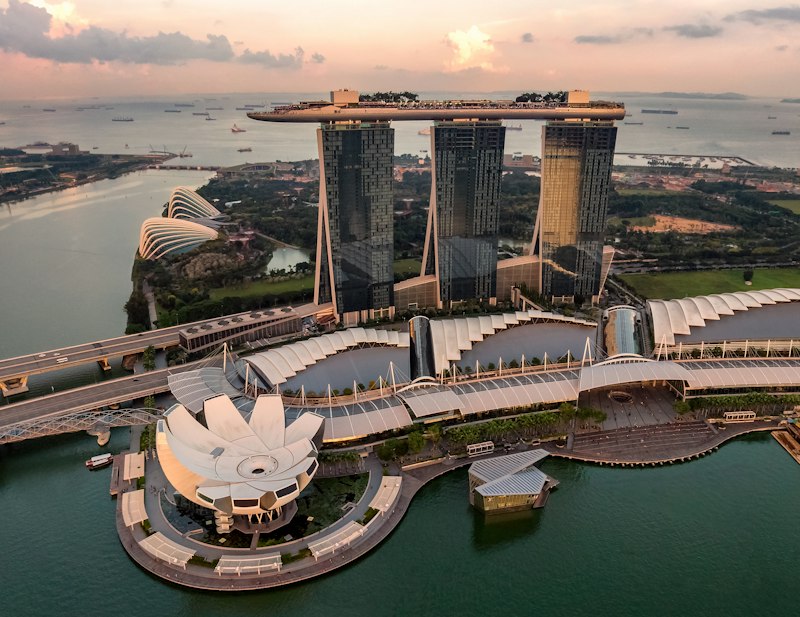
Singapore continues to set the standard for MICE in Asia Pacific. The city-state's Tourism 2040 plan aims to triple MICE revenue by clustering meeting spaces, retail, and transport nodes in a connected downtown hub. Marina Bay Sands, the Sands Expo & Convention Centre, and the upcoming expansion of Changi Airport's event facilities position Singapore as the region's premier business events destination.
India: Scale and Momentum
India is perhaps the most exciting growth story in MICE right now. The country's MICE market is projected to reach USD 27.88 billion by 2026, fueled by rapid economic growth and massive new venue capacity. India's Jio World Convention Centre in Mumbai has set new domestic benchmarks for scale and digital infrastructure, and several additional convention centers are under construction in Bengaluru, Hyderabad, and New Delhi.
Thailand: Mega-Events and Incentive Travel
Thailand's success in securing the 2029 International Horticultural Expo confirms its readiness for mega-events. The country has long been a leading incentive travel destination, and it is now building the hard infrastructure—convention centers, 5G connectivity, improved airport capacity—to compete for large-scale corporate conferences. TCEB (Thailand Convention & Exhibition Bureau) reported strong double-digit growth in international MICE visitors for 2025.
Japan and South Korea: Premium Positioning
Both countries are leveraging their reputations for technology, safety, and hospitality to attract high-value corporate events. Japan's preparations for the 2025 World Expo in Osaka have created lasting infrastructure that benefits the broader MICE sector. South Korea's MICE-focused visa programs and dedicated convention districts in Seoul and Busan continue to draw international association meetings.
What This Means for Event Planners
The Asia Pacific MICE boom creates both opportunities and challenges for planners:
Opportunity: Better Value and Newer Venues
Many Asian destinations offer significantly better value than equivalent venues in Europe or North America—not just on cost, but on quality. With so much of the region's MICE infrastructure newly built or recently upgraded, planners can access state-of-the-art venues, smart technology integration, and modern hospitality at competitive rates.
Opportunity: Incentive Travel Differentiation
Asia Pacific's diversity—from tropical beaches to cutting-edge cities to cultural heritage sites—gives incentive travel planners an enormous palette to work with. Programs that might feel generic in well-trodden European or Caribbean destinations can feel genuinely special when they leverage the unique character of destinations like Bali, Kyoto, or Chiang Mai.
Challenge: Logistics Complexity
Planning events across Asia Pacific introduces operational complexities that experienced planners must navigate carefully:
- Multi-timezone coordination across teams and vendors
- Visa and entry requirements that vary significantly by country and by attendee nationality
- Language barriers that affect vendor communication and attendee experience
- Currency management across multiple countries, with exchange rate volatility
- Varied regulatory environments for event permits, food safety, and insurance requirements
Challenge: Quality Consistency
While tier-one destinations like Singapore and Tokyo offer world-class reliability, secondary destinations may have more variable standards. Planners need strong local DMC (Destination Management Company) partnerships and robust quality assurance processes.
Technology as the Enabler
Managing events across Asia Pacific—or any international region—demands technology that can handle complexity at scale. The most effective planners in 2026 rely on centralized platforms that provide:
- Single-source attendee management across countries and events
- Real-time budget tracking in multiple currencies with automatic conversion
- Automated flight monitoring to manage transfers when attendees arrive from different time zones
- Multi-language communication tools that keep every participant informed
- Vendor coordination dashboards that give full visibility into logistics across multiple destinations
Without these capabilities, the operational burden of managing MICE programs in Asia Pacific can quickly become unmanageable. The planners who are thriving in this market are those who've invested in platforms that match the scale and complexity of the region.
Looking Ahead
The Asia Pacific MICE boom is not a temporary trend—it's a structural shift. Five of the ten largest economies by 2030 will be in the region, and corporate event spending follows economic activity. China, Japan, India, Singapore, and Thailand already collectively account for 71% of Asia Pacific MICE events, according to Mordor Intelligence, and that share is only growing.
For event planners, the message is clear: building expertise in Asia Pacific is no longer optional. Whether you're managing a multinational conference in Singapore, an incentive program in Thailand, or a sales kickoff in India, understanding this region's unique dynamics will increasingly define success in the MICE industry.
The growth is here. The infrastructure is ready. The question is whether your planning operation is equipped to take advantage of it.
Data sources: Precedence Research — MICE Market 2026–2035, Grand View Research — Asia Pacific MICE Market, Mordor Intelligence — APAC MICE Tourism, TTGmice — Fresh Prospects, Singapore Tourism Board — MICE.
Daniel Schaurich
Written by
Share this article